


AAC at Centre qap
Centre qap’s aim is to support children who struggle with spoken communication (through motor and/or cognitive handicaps) and help find adapted communication tools to improve their social interactions, independence and inclusion in the community and classroom.
The specialised services offered by the Centre include:
- guidance and information for the children, their families and care providers
- assessment, analysis, research, trialling materiel in everyday life, critical reviews
- training those involved (family, school, network at large) and support for the child’s entourage in the use of devices
- technical assistance
- expert reports
- raising local authorities’ awareness about the importance of AAC
Before a final decision about the best solution, material can be loaned on a trial basis.
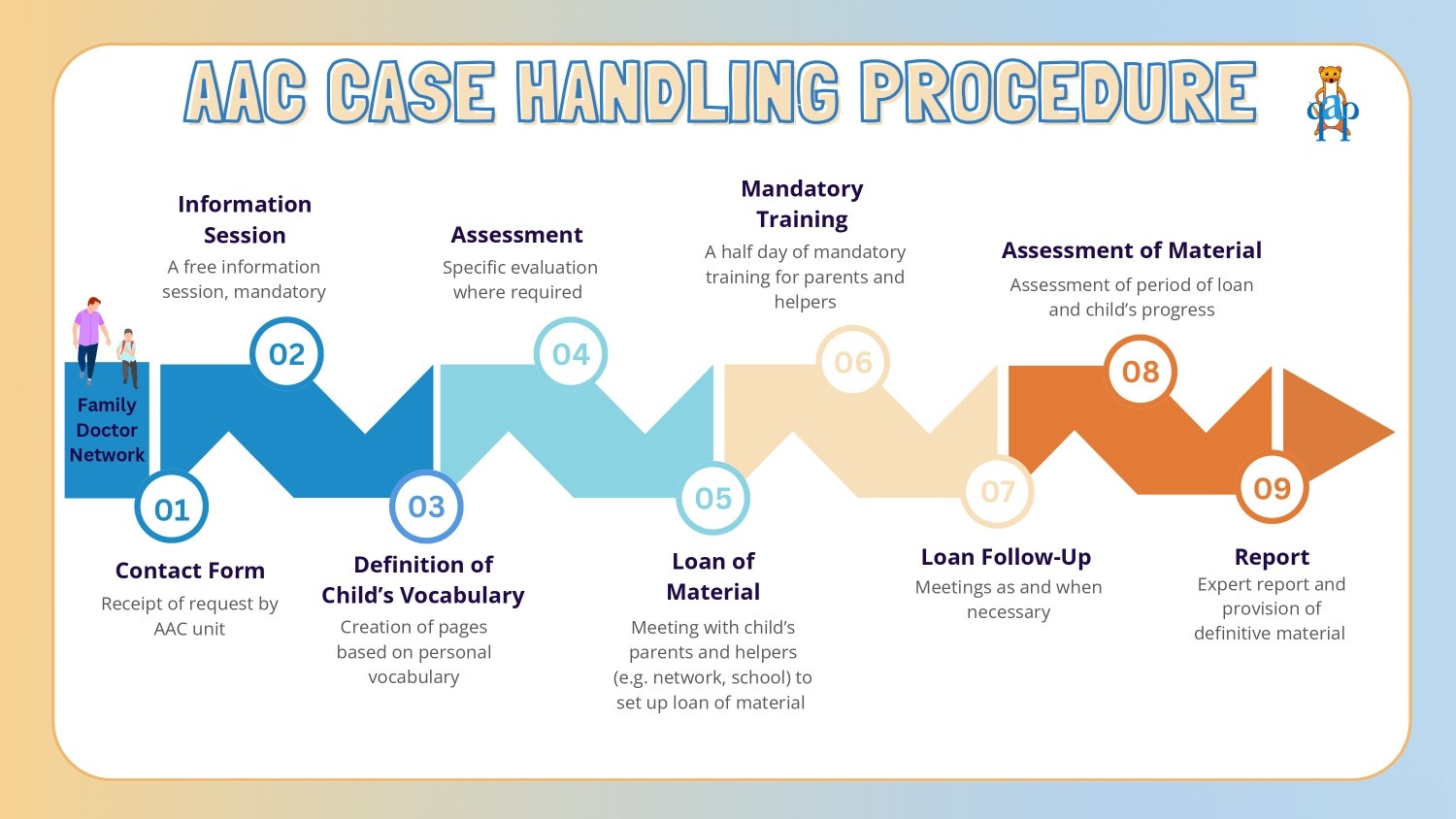
The project receives financial support from the Association Lokhos, which spearheaded Centre qap. This funding allows material to be loaned to families free of charge. In view of the expense involved in the AAC process, full commitment is requested from the families
Families who opt for AAC must be aware that implementing the tools will require a great investment in time on the part of the child’s whole entourage. Success depends on the tool being used in a variety of activities and situations (home, school, etc.) as well as on the parents, caregivers and educators setting an example (modelling) and using the tool as often as possible to communicate with the child. Learning to communicate with such tools takes time, just as it takes time to learn to speak.
‘The average 18-month-old has been exposed to 4,380 hours of oral language, at a rate of 8 hours a day from birth. A child who has a communication system and receives speech/language therapy two times a week for 20-30 minutes will reach the same amount of language exposure (in their AAC language) in 84 years.’
Jane Korsten, Speech/Language Pathologist