Occupational Therapy
Parents call on occupational therapists when a child’s condition or developmental delay means they struggle to carry out the tasks of daily life. Issues can range from difficulties putting on a coat, to cutting up food, colouring, catching a bus, handwriting, or adopting good sitting postures.
An occupational therapist will assess the causes of the dysfunction and identify the activities the child wants to master. They will depend on the person, their way of life and culture, because everyone has their own criteria for what they want to do, or for what is required to restore or maintain their state of health.
Accordingly, occupational therapists will devise a bespoke plan to:
- stimulate the perception and processing of sensory information (touch, body–space awareness, balance control)
- develop fine and gross motor skills in order to function better (manipulating objects, finding a stable position before acting)
- suggest strategies to help perform an action (focusing attention, planning and checking)
- promote social and emotional skills
- practise visual, auditory and spatial memory to condition action
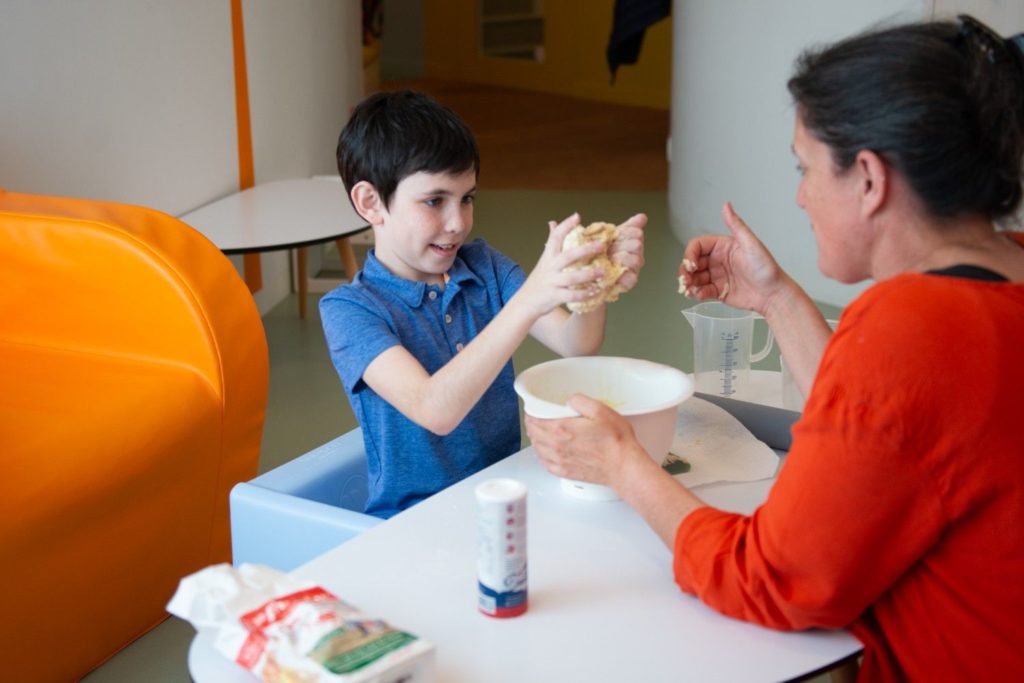
With children, occupational therapy sessions take the form of play in a fun, stimulating, and motivating environment. Therapists ensure the child is fully engaged and encourage them to accomplish new challenges successfully as they strive towards achieving their full potential. They target the activity to be improved, sometimes by breaking it down into the smaller steps or skills (pre-requisites) required for a successful outcome.
Occupational therapists can also help with respect to the child’s particular situation and environment. They advise on adaptations, helpful tools or make braces. These stopgap or permanent solutions build on the child’s current resources to help them become more independent in what they want to do. Occupational therapists also provide parents and caregivers with advice and information on the best strategies to help a child’s development.